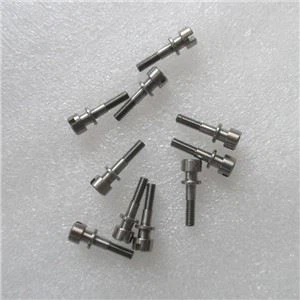
Q: What is the main thing titanium is used for?
A: Titanium is as strong as steel but much less dense. It is therefore important as an alloying agent with many metals including aluminium, molybdenum and iron. These alloys are mainly used in aircraft, spacecraft and missiles because of their low density and ability to withstand extremes of temperature.
Q: Is titanium a metal or steel?
A: As a metal, titanium is recognized for its high strength-to-weight ratio. It is a strong metal with low density that is quite ductile (especially in an oxygen-free environment), lustrous, and metallic-white in color.
Q: What are the environmental considerations in producing titanium?
A: Titanium occurs only in silicate or oxide minerals and never in sulfide minerals. Environmental considerations for titanium mining are related to waste rock disposal and the impact of trace constituents on water quality.
Q: What are 5 things titanium is used for?
A: Whether it's to manufacture boats, aircraft or cars, the titanium sheet is an ideal choice to make. Titanium is typically used to create aeroplane wings, blades, air frames and turbine discs. Titanium is often found in the structure of an aircraft but can also be used for space travel.
Q: Is titanium stronger than steel?
A: Steel is stronger than titanium, with higher tensile yield strength. However, titanium offers higher strength-to-weight ratios. Titanium boasts excellent corrosion resistance, especially in harsh environments. Some types of steel are more prone to corrosion.
Q: Which industry is titanium most suitable for use?
A: Automotive industries
Lightweight: Titanium has a low density compared to many other metals. It is ideal for use in lightweight structures and components in the aerospace and automotive industries. High Strength: Titanium's strength rivals that of steel.
Q: Does wearing titanium have health benefits?
A: The ionising effect can balance the electrical current that runs through the body, which no other metal can do. Wearing Titanium jewellery can reduce muscle stiffness and pain by providing less of an impact on the nervous and muscular system, without compromising the luxurious design of jewellery.
Q: Is titanium stronger than diamond?
A: Titanium certainly is not stronger and harder than diamonds. Diamonds' strength ranges around 60GPa whereas titanium can be as low as . 434Gpa or Gigapascals. On the other hand, Diamonds can easily outrank titanium in the scale of hardness, it ranges about 98.07 Rockwell C whereas, titanium ranges around 36 Rockwell C.
Q: What is the industrial preparation of titanium?
A: Regardless of the final usage titanium must first be removed from its ore and turned into pure titanium. This is done by processing titanium oxide manufactured from either ilmenite or rutile though the Kroll process. The output is a titanium sponge which is purified, melted and alloyed with other metals.
Q: Can titanium bend or break?
A: Titanium: Modulus of Elasticity. Titanium's modulus of elasticity is quite low, which suggests it flexes and deforms easily. Steel has a much higher modulus of elasticity, which allows it to be readily machined and lends it to be used in applications such as knife edges, as it will break and not bend under stress.
Q: Is titanium stronger than gold?
A: Titanium is the hardest natural metal in the world. It is very strong, three times the strength of steel and much stronger than gold, silver and platinum and yet is very light weight. Pure titanium is also 100% hypo-allergenic which means that it if safe for anyone to wear as it will not react to your skin.
Q: Why is titanium so hard to refine?
A: Due to titanium's affinity to other elements, it cannot be found naturally occurring and therefore requires complex and energy-intensive processes to refine it. This means that it is very expensive compared to other common materials.
Q: Can titanium stop a sword?
A: Titanium is durable and flexible, but it's also less dense than steel and softer, so it doesn't hold a sharp edge well. A titanium sword would hold up great and not bend or break, but wouldn't hit as hard or cut as well as a steel one.
Q: Are any guns made out of titanium?
A: There are guns made mainly of titanium, but they are much more expensive than steel guns, and, for the most part, a gun will contain only a few small titanium components, such as parts of the frame, fasteners, and revolver cylinders.
Q: What is the lifespan of titanium?
A: Other metals and materials typically last 20 years, while titanium pipes have an average lifespan closer to 40 years. Many of the properties that make titanium ideal for power plant condenser pipes also make it an ideal metal nuclear waste storage containers.
Q: What does titanium react badly with?
A: Titanium Dioxide powders or dusts are not compatible with OXIDIZING AGENTS (such as Perchlorates, Peroxides, Permanganates, Chlorates, Nitrates, Chlorine, Bromine And Fluorine) And Strong Acids (Such As Hydrochloric, Sulfuric And Nitric).
Q: Will titanium set off a metal detector?
A: Titanium does not set off conventional metal detectors because it does not contain enough ferrous material (such as iron or nickel). However, some other factors can affect whether titanium sets off a metal detector, such as the size of the item and its proximity to other metallic objects.
Q: How can you tell if titanium is real?
A: But there are some simple and proven ways to distinguish titanium from alloy steel and aluminum at home without special equipment. An affordable and easy way is to scratch glass with metal. The method is based on the ability of titanium to leave characteristic dark marks on the surface of glass and tiles.
Q: What is titanium for industrial use?
A: Due to their high tensile strength to density ratio, high corrosion resistance, and ability to withstand moderately high temperatures without creeping, titanium alloys are used in aircraft, armor plating, naval ships, spacecraft, and missiles.
Q: Is titanium more bulletproof than steel?
A: And although its durability and multi-hit performance bring steel armor plates to mind, the Mantis titanium armor plate has a vastly better performance-to-weight ratio, it's not especially vulnerable to M193 (or similar rounds) at any reasonable velocity, and there is no bullet frag or “spall” problem — because, as ...