Xi'an Econ Industrial Corp.

Vacuum Furnace

workshop
 
Company Profile
 

Xi'an Econ Industrial Corp is located in Xi’an, China, specializing in producing and exporting refractory metal products, which include molybdenum, tungsten, tantalum, niobium, and their alloys. It is one of the earliest professional manufacturers engaged in the research, development, production and service of tungsten, molybdenum and their alloy plates, rods, sheets, foils, rods and deep processed products in China. The company has a full range of technical R&D personnel and production technicians for tungsten, molybdenum, tantalum, niobium and their deep processing equipment, as well as various refractory high-temperature products.

 
Why Choose Us
 

Our Products

Specializing in producing and exporting refractory metal products, which include molybdenum, tungsten, tantalum, niobium, and their alloys. It is one of the earliest professional manufacturers engaged in the research, development, production and service of tungsten, molybdenum and their alloy plates, rods, sheets, foils, rods and deep processed products in China.

Product Application

With decades of experience and state-of-the-art technologies, we especially concentrate on designing, researching and developing down-stream processed and finished products for many kinds of industrial applications in such fields as high temperature, anti-corrosion, electronics , lighting, medical equipments, radiation shielding and semiconductor .

Our Factory

Xi'an Econ Industrial Corp is located in Xi’an, China, specializing in producing and exporting refractory metal products, which include molybdenum, tungsten, tantalum, niobium, and their alloys.

Certificate

As an As an ISO9001:2015 certified company, we are equipped with complete production line, from sintering & E-beam smelting to forging, rolling, machining and stringent testing procedures, which enables us to supply our customers with varieties of refractory metal products. The products are well recognized in overseas market, including America, Europe, and Southeast Asia.


  • MoLa Fuel Sintering tray

    MoLa Fuel Sintering tray

    1.Product name: Mo/La fuel pellet sintering skirt/tray. 2.Material: Molybdenum, Mo/La, MLR Mo. 3.Application: for the sintering process of fuel pellet. 4.Surface: ground and grit blasted.

    Add to Inquiry
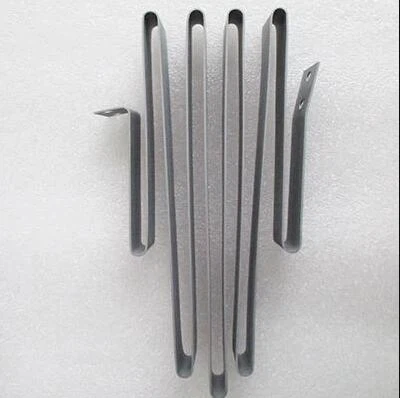
  • Molybdenum Heating Elements

    Molybdenum Heating Elements

    1.Product name:molybdenum heating elements. 2.Model Number:Mo1. 3.Grade:Mo1 Mo2 TZM. 4.Purity:99.95% Mo. 5.Application: Vacuum Furnace.

    Add to Inquiry
  • Vacuum Furnace heat shield

    Vacuum Furnace heat shield

    XIAN ECON INDUSTRIAL CORP manufactures hot zones (pure molybdenum, Mo/La molybdenum, TZM molybdenum, tungsten, tantalum), heating elements, hearth assemblies and other refractory metal furnace

    Add to Inquiry
  • Vacuum Furnace Heating Elements

    Vacuum Furnace Heating Elements

    1.Material:Mo. 2.Purity:99.9%. 3.Density≥10.2g/cm^3. 4.XIAN ECON INDUSTRIAL CORP. supplies Tungsten, Molybdenum and Tantalum heating elements which are characterized by their strength and stability

    Add to Inquiry

What is Vacuum Furnace?


A vacuum furnace is a type of furnace that can heat materials to very high temperatures. The function is to carry out processes such as heat treatment, sintering or brazing.Hot Zones using graphite sheets The area where the heat is produced is called a hot zone. Since the early development of the vacuum furnace, engineers and thermal experts have tried to improve the insulating characteristics and the performance of the components inside the hot zone. Most of the early designs of vacuum furnaces used an all-metal design. As vacuum furnaces became an important production tool, alternate materials have been used with various success.
Utilizing the appropriate materials to place in service is of key importance and will change with each particular application. Choosing the correct materials will result in controlled atmosphere and vacuum furnaces capable of running at uniform temperatures up to 5250°F+ with low contamination and minimizing power losses.


Advantages of Vacuum Furnace
 
 
Enhanced Product Quality

Minimized Oxidation and Decarburization: In the absence of air, materials processed in vacuum furnaces are less prone to oxidation and decarburization. This results in a cleaner, smoother surface finish, preserving the integrity and appearance of the product.
Consistency in Results: Vacuum furnace systems deliver uniform heating, which ensures consistent quality across batches. This is vital for industries where precision is non-negotiable.

 
Precise Temperature Control

Accurate Heat Application: The ability to precisely control temperature in vacuum furnaces means that heat is applied exactly where and how it's needed, ensuring optimal treatment of materials.
Customized Heat Profiles: Different materials require different heat treatment profiles. Vacuum furnaces allow for such customization, catering to the unique properties of each material.

 
Uniform Heating and Cooling

Even Material Properties: Uniform heating and cooling prevent the development of stress and distortion in materials, ensuring their strength and durability.
Improved Material Performance: This uniformity translates to improved performance characteristics of the materials, which is essential in high-stress applications like aerospace or automotive parts.

 
Increased Process Efficiency

Faster Cycle Times: Vacuum furnaces can reach the desired temperatures more rapidly than conventional furnaces, leading to shorter overall processing times.
Energy Efficiency: These furnaces are generally more energy-efficient, reducing operational costs and benefiting the environment.

 
Environmentally Friendly Process

Reduced Emissions: With no need for combustion in a vacuum, these furnaces emit fewer pollutants, making them a greener option.
Lower Carbon Footprint: The overall process efficiency and reduced energy consumption contribute to a lower carbon footprint.

 
Versatility in Applications

Broad Material Compatibility: From metals to ceramics, vacuum furnace heat treatment is used to process a wide variety of materials, making these furnaces versatile tools in many industries.
Adaptable for Different Processes: Be it annealing, brazing, sintering or hardening, vacuum furnaces are adaptable to various heat treatment processes.

 
Enhanced Safety Features

Reduced Fire Risk: Operating in a vacuum means there's no oxygen to fuel fires, significantly reducing the risk of accidents.
Controlled Atmosphere: The controlled environment inside a vacuum furnace improves quality and enhances operator safety.


Types of Vacuum Furnace
Vacuum Furnace heat shield
Molybdenum Heating Element
productcate-378-371
Vacuum Furnace Heating Elements

Vacuum brazing furnaces
Vacuum brazing furnaces are mainly used for vacuum brazing of aluminum alloy heat exchangers and other aluminum products, brazing of stainless steel, titanium alloys, hard alloys, high-temperature alloys, non-ferrous metals, and vacuum tempering of high-speed steel, mold steel, bearing steel, stainless steel, etc., as well as aging and annealing treatments of non-ferrous metals, and vacuum brazing of stainless steel heat exchangers, engine oil coolers, and stainless steel thermos cups.


Vacuum gas quenching furnaces
Vacuum gas quenching furnaces are primarily used for the high-pressure gas quenching of materials such as high-speed steel, tool steel, mold steel, and alloy structural steel.
They can also be used for high-temperature brazing and solid solution of stainless steel materials; sintering and aging treatments of powder materials etc. It also has a quick cooling function during annealing and solid solution.


Vacuum sintering furnaces
Vacuum sintering furnaces are used under a hydrogen gas protection status after vacuum pumping, using the principle of medium frequency induction heating, causing the tungsten crucible in the coil to generate high temperatures, which is transmitted to the work by thermal radiation conduction, suitable for research and military units for sintering powder forming of refractory alloys such as tungsten, molybdenum, and their alloys. It is divided into horizontal vacuum sintering furnaces and vertical vacuum sintering furnaces.


Vacuum Annealing Furnace
The vacuum annealing furnace is primarily utilized for deep drawing of stainless steel components such as plumbing fixtures, ensuring no oxidation.
Notably, the vacuum annealing furnace provides high productivity and a bright, non-oxidized surface of the treated products. It is widely applied in fields including stainless steel bearings, cutting tools, self-tapping and self-drilling screws, and stainless steel wire coils.
The furnace can also operate under a protective atmosphere, causing minimal pollution. The primary function of the vacuum is to serve as a barrier preventing high-precision metal components from coming into contact with complex gas compositions under high-temperature conditions, which can also be used for atmosphere annealing.


Vacuum Tempering Furnace
The vacuum tempering furnace is generally suitable for parts that require a bright and non-oxidized surface after tempering. It can be applied for high-temperature tempering of mold steel, high-temperature alloys, elastic alloys, copper alloys, titanium alloys, stress relieving and softening annealing of copper and copper alloys, while also offering quick cooling functionality.


Vacuum Oil Quenching Furnace
The vacuum oil quenching furnace is suitable for the vacuum heat treatment of mold steel, spring steel, stainless steel, bearing steel, high-temperature alloy steel, and can also perform annealing.


Vacuum Carburizing Furnace
The vacuum carburizing furnace can flexibly implement various heat treatment processes such as vacuum carburizing, vacuum carbonitriding, vacuum carburizing plus oil quenching, vacuum carburizing plus gas quenching, and other functions of the vacuum furnace. It can be used to perform relevant heat treatments on various materials and parts in the industrial field.


Vacuum Furnaces Applications


Vacuum furnaces have a wide range of applications across many industries. Here are some of the most common applications: 


Vacuum Heat treatment: Vacuum furnaces are often used for heat treating materials such as metals, alloys, and ceramics to improve their strength, hardness, and other properties.


Vacuum Brazing: Vacuum furnaces can be used for brazing, which is a process that involves joining two metal parts together using a filler material that melts at a lower temperature than the base metals.


Vacuum Sintering: Vacuum furnaces can be used for sintering, which is a process that involves heating powder materials to form a solid mass.


CVD and PVD coating: Vacuum furnaces can be used for chemical vapor deposition (CVD) and physical vapor deposition (PVD) coating, which involves depositing thin films of materials onto a substrate.


Vacuum Annealing: Vacuum furnaces can be used for annealing, which involves heating a material to a specific temperature and holding it there for a period of time to relieve stress and improve its ductility.


Debinding and sintering of metal injection molded (MIM) components: Vacuum furnaces can be used for debinding and sintering of metal injection molded (MIM) components, which are used in various applications such as medical devices, aerospace, automotive, and electronics.


Crystal growth: Vacuum furnaces can be used for crystal growth of various materials, such as semiconductors and optical crystals.


Vacuum furnace operation process


Open the vacuum furnace door and charge the furnace. Close the door and make sure the furnace chamber seal is intact.


Check the manual vacuum valves to make sure they are closed.


Feed the main power supply and the control display lights up.


Turn on the water cooler, enter the required water temperature on the water cooler operation interface and start the water cooling system (see the water cooler operation manual for details).


Open the exhaust port on the rotary vane pump to ensure gas circulation. (After the rotary vane pump is used, seal the exhaust port to avoid debris entering the rotary vane pump.) Make sure the diffusion pump and rotary vane pump valves are closed.


Start the rotary vane pump and diffusion pump on the touch screen operation interface.


Slowly rotate to open the rotary vane pump valve to avoid the exhaust port from spraying oil due to excessive air volume.


After the rotary vane pump and diffusion pump run for about 1 hour and the display on the right side of the vacuum, gauge shows less than 100Pa, close the rotary vane pump valve and open the diffusion pump valve.


Close the vacuum pump set after the vacuum gauge display reaches the required vacuum degree and starts to heat up. (Vacuum pump set-closing process: close the diffusion pump valve first → stop diffusion pump → stop rotary vane pump after 40 minutes) also can be heated during the vacuum pumping process.


Enter the required process requirements on the heating operation interface and start heating.


After the heating process is stopped, (if the vacuum is added to the process, wait for the vacuum furnace chamber temperature to drop to a suitable temperature for the process, close the vacuum pumping unit, close the process as above) diffusion pump temperature drop. To the touchable temperature before closing the water cooler.


When the furnace temperature drops to room temperature, open the bleeder valve, and wait for the internal air pressure of the furnace chamber to atmospheric pressure.


Open the furnace door and take out the material.


After taking out the material, clean the inside of the vacuum furnace chamber, keep the door closed when not in use for a long time, and keep the vacuum inside the chamber.


Components of Vacuum furnace
 

Vacuum furnace chamber

The vacuum furnace chamber is mainly divided into a stainless steel chamber, ceramic fiber chamber, molybdenum foil chamber, and graphite chamber. The maximum temperature ranges from 750°C to 2200°C.

Vacuum furnace heating elements

Vacuum furnace heating elements are mainly divided into resistance wire, silicon carbon rod, molybdenum wire and rod, silicon molybdenum rod, graphite, induction coil, etc. The maximum temperature ranges from 750℃ to 2200℃.

Temperature control system

The temperature control system of the vacuum furnace is mainly composed of thermocouples (temperature measurement) and temperature controllers (temperature control). It is mainly divided into PID programmable control, touch screen control, and PLC fully automatic control.

Vacuum System

The vacuum system consists of vacuum valves, mechanical pumps, diffusion pumps and Roots pumps according to the required vacuum level. The maximum vacuum level is generally 7×10⁻³ Pa.

Water cooling system

According to the size of the furnace chamber, a matching water cooling system is required to ensure that the vacuum furnace can work properly.

Sealed furnace shell

The furnace shell casing must be well sealed to ensure that the designed vacuum level can be achieved.


Vacuum furnace daily maintenance


1

For the empty pump with gas ballast function, check it before opening the furnace every day and open it for 30 minutes as needed to remove the water in the pump oil. SIMUWU engineers recommend that customers choose EVP brand 2X series rotary vane vacuum pumps and 2H series slide valve vacuum pumps.

2

Frequently check the pressure of cooling water, compressed air, hydraulic system and the flow of cooling water.

3

The rubber seal and flange surface of the furnace door should be inspected before closing the guard door. There should be no sand and debris. Wipe the rubber seal ring and flange surface with a Qianjing cloth, and then evenly apply vacuum grease to the back The furnace door can be closed.

4

The vacuum furnace workpiece must be cleaned before it is put into the furnace for processing. After the oil quenching treatment, all the oil on the oil-soaked material frame and the carrying parts should be cleaned.

5

Air-cooled motors are generally commonly used motors. They cannot be started under vacuum and must be inflated before starting and should be protected by electrical interlocking protection devices.

6

Roots pumps should be started with a vacuum above 133Pa, and should also be protected by electrical interlocking protection devices. It is recommended to use EVP brand ZJ series roots vacuum pumps with high pumping speed and low power consumption.


The working principle of vacuum furnace


Heat treatment vacuum furnace is a comprehensive technology combining the two specialties of vacuum technology and heat treatment, which means that all and part of the heat treatment process are carried out under the vacuum state. China divides vacuum into low, medium, high and ultra high vacuum. At present, the working vacuum degree of most heat treatment vacuum furnaces is ~1.33 10 ³. Pa.

The vacuum furnace for heat treatment can realize almost all heat treatment processes, such as quenching, annealing, tempering, carburizing and nitriding, and can realize gas quenching, oil quenching, nitrate quenching and water quenching in the quenching process, as well as vacuum brazing, sintering and surface treatment. Heat treatment vacuum furnace high thermal efficiency, can achieve rapid temperature rise and drop, can achieve no oxidation, no decarburization, no carburization, can remove the workpiece surface phosphorus chips, and have degreasing degassing, so as to achieve the effect of bright surface purification. Generally speaking, the processed workpiece is heated slowly in the furnace, the internal thermal temperature difference is small, the thermal stress is small, so the deformation is small. High pass rate of products. It can reduce the cost and has the function of degassing, so as to improve the working mechanical properties and service life. Good working environment, safe operation, no pollution and public hazards. The processed workpiece has no danger of hydrogen embrittlement, which can prevent the surface of titanium material and refractory metal shell from hydrogen embrittlement, and the vacuum heat treatment process has good stability and repeatability. This series of advantages, the development of vacuum heat treatment processing equipment and technology is more and more attention and more widely used.


Certificate


As an ISO9001:2015 certified company, we are equipped with complete production line, from sintering & E-beam smelting to forging, rolling, machining and stringent testing procedures, which enables us to supply our customers with varieties of refractory metal products.


productcate-1-1


FAQ


Q: What is a vacuum furnace used for?

A: Vacuum furnaces are used to carry out processes such as annealing, brazing, sintering and heat treatment with high consistency and low contamination. Characteristics of a vacuum furnace are: Uniform temperatures in the range. 800–3,000 °C (1,500–5,400 °F)

Q: What is the difference between a vacuum furnace and an atmosphere furnace?

A: The difference between an atmosphere furnace and a vacuum furnace is that vacuum heat treatment technology is an integrated technology connected with heat treatment technology and vacuum heat treatment technology

Q: Should I vacuum furnace?

A: Vacuum the burners and furnace base using a shop vac or household vacuum with a wand/upholstery attachment. Use extensions if necessary, doing your best to reach the back. Lift the blower door to vacuum the compartment. Keep an eye out for soot, which indicates poor combustion and requires further attention.

Q: What is the purpose of vacuum heat treatment?

A: Metal parts that need to withstand intense high heat and stress require vacuum heat treatment. In vacuum heat treatment, most of the air and reactive elements like oxygen are removed using a vacuum furnace to prevent discoloration and oxidation and improve material strength.

Q: What type of furnace is most efficient?

A: The most efficient Furnace you can buy is a 98% modulating variable speed furnace. Almost every manufacturer has a variation of this type of furnace. With that said this is one of the most expensive to buy and install. Also, not every home can have this style of furnace due to various factors like duct system design.

Q: What are the three types of furnaces?

A: There are many concerns when deciding whether to choose a gas, oil, or electric furnace. Our technicians can help you make this difficult decision. Most North American homes are kept warm with furnaces, of which there are three main types: natural gas, oil and electric.

Q: What is better than a furnace?

A: A heat pump is an energy-efficient alternative to a furnace and air conditioner. A heat pump uses electricity to transfer heat from a cool space to a warm one. In the winter, it takes the heat from outdoors and uses it to heat your home.

Q: Does my furnace need to be cleaned every year?

A: How Often Should You Clean Your Furnace & Ducts. We usually advise that you schedule furnace maintenance every 1-2 years (ideally once a year) and duct cleaning at intervals of 3 to 5 years for a smooth-running system and excellent indoor air quality. That's the minimum.

Q: Can I vacuum the inside of my furnace?

A: Clean the housing: Use a large, clean, and dry paintbrush to remove dust and grime, and clean the blower motor housing. Vacuum up extra dirt: Vacuum out the entire interior of the furnace blower chamber to remove any dust or dirt that fell during cleaning.

Q: What happens if you don't clean your furnace?

A: While your furnace works to heat your home, it ends up taking in a lot of troublesome matter. The average furnace is a magnet for dirt, dust, and other particulate matter and debris. If you don't keep your furnace clean, you're letting harmful debris get distributed around your house.

Q: What is the burnout cycle on a vacuum furnace?

A: Burnout cycles are good for getting the process contaminants out of the insulation and generally improve pump-down times. The burnout cycle temperature should be 50°C (122°F) over your typical process temperature

Q: Where does heat go in a vacuum?

A: Heat transfer by conduction and convection works by particles colliding and transferring energy, as there are no particles in a vacuum heat transfer can only occur by radiation. This is because radiation involves electromagnetic waves, not particles, and is therefore able to transmit heat across a vacuum.

Q: How do you remove heat from a vacuum?

A: The only way it is possible to dissipate heat from a spaceship (or anything in a vacuum) is by thermal radiation. That means it's entirely dependent on the surface area. The only way of dissipating more heat would be to have large radiator surfaces and pump some fluid through them.

Q: How long does the vacuum heat treatment process take?

A: At a controlled rate, and then the temperature is lowered. “Soak” time depends on the “recipe” for the part and the particular material it is made of. A vacuum heat treatment cycle takes three to 24 hours and sometimes longer. The process is computer controlled to insure uniformity and repeatability.

Q: How does vacuum reduce temperature?

A: The products to be cooled are kept in that airtight chamber. As the pressure is reduced the boiling point of water reduces and water starts to evaporate, taking heat from the product. As a consequence of this evaporation, the product temperature begins to decrease.

Q: Why do some nonferrous metals require a vacuum furnace for heat treating?

A: At high annealing temperatures, metal surfaces are susceptible to oxidation and decarburization. Therefore, a vacuum atmosphere is often used in bright annealing processes to prevent oxidation and achieve a bright, oxide-free surface appearance.

Q: Is a 2 stage furnace better?

A: Using a two-stage furnace improves airflow. Improved airflow prevents the air from settling, leading to fewer temperature fluctuations. This will allow homeowners to set their thermostats lower in the winter because the air in the home will feel warmer, and they won't have to deal with cold spots.

Q: Should I vacuum furnace?

A: Vacuum the burners and furnace base using a shop vac or household vacuum with a wand/upholstery attachment. Use extensions if necessary, doing your best to reach the back. Lift the blower door to vacuum the compartment. Keep an eye out for soot, which indicates poor combustion and requires further attention.

Q: How does vacuum reduce temperature?

A: The products to be cooled are kept in that airtight chamber. As the pressure is reduced the boiling point of water reduces and water starts to evaporate, taking heat from the product. As a consequence of this evaporation, the product temperature begins to decrease.

Q: What happens during a furnace cleaning?

A: Furnace servicing involves checking the overall system's essential components and adjusting, cleaning, testing, and/or lubricating them, as needed. Inspecting the vent system and air intake grilles, removing any blockages, and checking the heat exchanger for signs of and damage also include in a furnace service .

We're professional vacuum furnace manufacturers and suppliers in China, specialized in providing high quality customized service. We warmly welcome you to buy vacuum furnace for sale here from our factory.

Mo La Fuel Pellet Sintering Skirt tray paseplate, Vacuum Furnace Parts, Vacuum Furnace
goTop

(0/10)

clearall