Xi'an Econ Industrial Corp.

Tungsten

workshop
 
Company Profile
 

Xi'an Econ Industrial Corp is located in Xi’an, China, specializing in producing and exporting refractory metal products, which include molybdenum, tungsten, tantalum, niobium, and their alloys. It is one of the earliest professional manufacturers engaged in the research, development, production and service of tungsten, molybdenum and their alloy plates, rods, sheets, foils, rods and deep processed products in China. The company has a full range of technical R&D personnel and production technicians for tungsten, molybdenum, tantalum, niobium and their deep processing equipment, as well as various refractory high-temperature products.

 
Why Choose Us
 

Our Products

Specializing in producing and exporting refractory metal products, which include molybdenum, tungsten, tantalum, niobium, and their alloys. It is one of the earliest professional manufacturers engaged in the research, development, production and service of tungsten, molybdenum and their alloy plates, rods, sheets, foils, rods and deep processed products in China.

Product Application

With decades of experience and state-of-the-art technologies, we especially concentrate on designing, researching and developing down-stream processed and finished products for many kinds of industrial applications in such fields as high temperature, anti-corrosion, electronics , lighting, medical equipments, radiation shielding and semiconductor .

Our Factory

Xi'an Econ Industrial Corp is located in Xi’an, China, specializing in producing and exporting refractory metal products, which include molybdenum, tungsten, tantalum, niobium, and their alloys.

Certificate

As an As an ISO9001:2015 certified company, we are equipped with complete production line, from sintering & E-beam smelting to forging, rolling, machining and stringent testing procedures, which enables us to supply our customers with varieties of refractory metal products. The products are well recognized in overseas market, including America, Europe, and Southeast Asia.


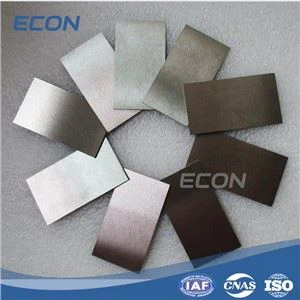
  • Tungsten Sheet Plate

    Tungsten Sheet Plate

    1.Product name:Tungsten Sheet. 2.Size:0.05~50mm(thickness)×50~500mm(width)×100~1500mm(length).

    Add to Inquiry
  • Tungsten Tube

    Tungsten Tube

    Producing thermowell,crucibles parts for sapphire crystal growth and rare-earth melting

    Add to Inquiry
  • Tungsten Wire

    Tungsten Wire

    1.Product name;Tungsten wire. 2.Processing:Wire made by forging and drawing tungsten bars.

    Add to Inquiry
  • Tungsten-boats

    Tungsten-boats

    Tungsten boat can also be called evaporation boat, evaporation tungsten boat or coating

    Add to Inquiry
  • Tungsten Pin/Tungsten discharge Pin

    Tungsten Pin/Tungsten discharge Pin

    1.Tungsten pin is a kind of tungsten product, which is made of pure tungsten or tungsten alloy

    Add to Inquiry
  • Tungsten Counterweights

    Tungsten Counterweights

    Copper Tungsten and Tungsten Carbide Copper (CW55, CW60, CW65, CW70E, CW75, CW80)

    Add to Inquiry
  • Tungsten Crucible

    Tungsten Crucible

    Tungsten Crucible, Tungsten, Molybdenum Crucible manufacturer / supplier in China, offering High

    Add to Inquiry
  • Tungsten Round Beads

    Tungsten Round Beads

    Basic Info Model NO.: W beads Specification: diameter1.5mm-diameter6.4mm Origin: China HS Code:

    Add to Inquiry
  • Tungsten Boats for Vacuum Coating

    Tungsten Boats for Vacuum Coating

    Tungsten Boats for Evaporation, Tungsten Boats for Vacuum Coating, Tungsten Plates manufacturer /

    Add to Inquiry
  • Tungsten Crucible

    Tungsten Crucible

    1.Product name:Tungsten crucible. 2.Purity:99.9%. 3.density. 4.Temperature environment:2400℃.

    Add to Inquiry
  • 99.95%Ground Tungsten Plates

    99.95%Ground Tungsten Plates

    1.Product name:Ground Tungsten plates. 2.Grade: W1. 3.Purity: W1≥99.95%, W1 Alloy≥99.1%.

    Add to Inquiry
  • Tungsten Rod

    Tungsten Rod

    1.Product name:Tungsten rod/bar. 2.Size:dia2.4mm-90mm. 3.Surface:ground. 4.Purity:99.95

    Add to Inquiry
First 12 Last 1/2

What is Tungsten?


Tungsten is as heavy as gold (density 19.3 g /cm³), as hard as diamond (in the form of tungsten carbide) it’s practically giving diamonds a run for their toughness. But here’s the real kicker – while iron’s turning into a steamy mess, tungsten’s just hanging out, shrugging off scorching heat with a melting point that hits a blazing 3422°C.
Tungsten, with its impressive atomic number and a melting point that could make other metals melt in envy, is a bona fide element.


Benefits of Tungsten
 
 
Resistance to high temperatures

Of all metals in their purest form, tungsten has the highest melting point (3422°C). This can be hugely beneficial in certain situations (particularly when compared to other more common metals). For example, it makes tungsten an excellent material for high-temperature environments – and this is why it is so widely used in the aerospace, automatic and construction industries.
Tungsten metal is also regularly used to create alloys and superalloys. Its extremely high melting point and resistance to thermal creep help to strengthen the alloy, making it suitable for more thermally intensive applications, where other metals would fail.

 
High-density

Tungsten benefits from a very high density. In fact, at 19.3 g/cm3, it is amongst the highest of all metals, with tungsten’s density measuring approximately 19.3 times higher than that of water and 1.7 times higher than that of lead.
As a result of this property, tungsten can hold much more weight in a smaller package – and is commonly used for applications were mass is required in small sizes. For example, due to the high density of tungsten, it is a fantastic option for making racing car ballast, aircraft ballast and kinetic munitions – which must be small and streamlined, yet capable of transferring lots of energy.

 
Low thermal expansion

Tungsten has the lowest coefficient of thermal expansion of all pure metals. Compared to common manufacturing materials (e.g. steel), this gives it the benefit of added stability under extreme heat. It has a structural solidity unmatched by other metals and is especially useful when rigidity at high temperatures is required – such as in tungsten carbide cutting tools or jet engine turbine blades.

 
Electronic structure

Due to its conductive properties and relative inertness, tungsten metal is widely used in the electronics industry and environments involving high levels of radiation. For this reason, along with its very high density, tungsten is one of the main sources of metal for X-ray targets and other high-energy radiation shielding – as the relatively inert, very high-density material is difficult for x-rays to penetrate. Tungsten metal also frequently finds use in electrodes, conductors and metallic films.

 
Corrosion-resistance

Tungsten is highly resistant to corrosion and can be used in a range of corrosive environments and outdoor applications. For example, it is particularly useful when prolonged exposure to corrosive substances – such as water, acid, or solvents – is likely.
A commonly-encountered corrosive environment, which many metals are unable to deal with, is a marine environment. Salt water, in particular, is extremely corrosive to many metals. However, when alloyed with other metals, the resistance of tungsten metal makes it extremely suited to such a harsh environment, enabling it to be used in shipbuilding, fishing lures and jewellery.

 
Strength in fabrication

Tungsten is an extremely robust metal, with the highest tensile strength of all pure metals. While this can make it brittle under certain circumstances, when it comes to the process of metal fabrication, tungsten’s rigidity means that it can be drawn into very thin wires without fracturing.


Types of Tungsten
 

Pure Tungsten, EWP Welding Electrode

Pure tungsten TIG welding electrode has very low heat resistance and electron emission properties in all other types of tungsten electrodes.
This restricts the use of pure tungsten electrodes only for welding aluminum and magnesium alloys where it is beneficial to remove the hard oxide layer by cleaning action. The working life of pure tungsten electrodes is short.

Lanthanum Tungsten, EWLa-1.5 & 2

Lanthanum oxide (La2O3) in about 1%-2% concentration is added to tungsten electrodes. Lanthanum oxide tungsten’s are not radioactive and hence safe to use as per safety requirements.
They have current-carrying properties similar to thoriated tungsten electrodes, except that they have a slightly higher arc voltage than thorium and cerium tungsten’s.

Cerium Tungsten, EWCe-2

The addition of Cerium oxide (CeO2) by 2% to tungsten increases the current-carrying capacity similar to the thoriated electrode.
Ceriated tungsten electrodes are developed in place of the thoriated electrodes as a safe alternative. They provide better arc stability and good arc-starting.
The life of Ceriated electrodes is also longer similar to thoriated tungsten electrodes. These tungsten electrodes can be used for DCEP, DCEN, and AC polarity.

Zirconium Tungsten, EWZr-8

Zirconium oxide (ZrO2) is added to tungsten to make the Zirconium Tungsten electrode. Zirconium oxide (ZrO2) helps tungsten emit electrons freely.

Zirconium oxide (ZrO2)

Has similar effects like Thorium but to a lesser extent. Because zirconium tungsten’s are more easily melted than thorium tungsten, ZrO2 electrodes can be used with both AC and DC currents.
Due to the difficulty in getting the desired balled end on thorium vs. zirconium tungsten, a Zirconated electrode is used for AC welding of aluminum and magnesium alloys.

Alloy Not Specified, EWG

The EWG classification is for tungsten electrodes means that the manufacturer can make their own electrode with the modified percentage of doping elements.
You can consider them similar to ER70S-G welding wire where wire manufacturers can choose the wire chemistry. EWG-designated electrodes are rarely used in TIG welding applications.


Chemical Properties of Tungsten


Chemical Properties

Description

Acid Resistance

Resistant to nitric acid, hydrofluoric acid, hydrochloric acid, sulfuric acid, and aqua regia at low temperatures; weakly affected by some acids at elevated temperatures

Dissolution in Mixed Acid

Quickly dissolves in a mixed acid of hydrofluoric acid and concentrated nitric acid at normal temperatures

Reaction with Oxidants

Intense reaction with oxidants (NaNO3, NaNO2, PbO2, KClO3) to produce tungstate

Alkali Resistance

Does not dissolve in alkaline solutions

Reaction with Carbon

Reacts with carbon at high temperatures to produce tungsten carbide, known for its hardness and wear resistance

Combination with Elements

Can combine with chlorine, nitrogen, oxygen, fluorine, bromine, iodine, carbon, and sulfur at high temperatures; does not undergo hydrogenation

Oxidation in Air

Molten alkali in the presence of air can oxidize tungsten to tungstate

Dissolution in Mixed Acid

Quickly dissolves in a mixed acid of hydrofluoric acid and concentrated nitric acid at normal temperatures


Physical Properties of Tungsten


Physical Properties

Description

Appearance

Silver-white metal with a steel-like appearance.

Group

Belongs to group VIB of the periodic table.

Melting Point

High melting point of 3,422 °C.

Boiling Point

The boiling point can reach 5,927 °C.

Atomic Number

74

Density

19.35 g/cm³, 2.5 times that of steel, equivalent to gold.

Electrical Conductivity

Exhibits good electrical conductivity

Elastic Modulus

High elastic modulus of 35,000–38,000 MPa (Wire).


What Are the Applications of Tungsten?
Pure Tungsten Crucible
Vacuum Furnace heat shield
Tungsten Round Beads
Molybdenum Plate

Electronics
Tungsten is essential to electronics as an interconnecting material for integrated circuits. Tungsten is prominent for its elevated electrical conductivity and resilience. This guarantees effective signal transfer among diverse constituents in electronic apparatuses, hence augmenting their dependable functionality and bolstering the complex interconnectivity indispensable for contemporary technologies.


Alloys
It is common practice to combine tungsten with refractory metals to create alloys with qualities appropriate for a variety of uses, such as turbine blades and rocket-engine nozzles, as well as fine darts.


Fusion Power
In fusion power, tungsten surpasses carbon for plasma-facing materials (PFM) in upcoming nuclear reactors. Its exceptional high-temperature strength, minimal erosion, efficient thermal conductivity, low tritium retention, and relatively low activation under neutron irradiation make tungsten the preferred choice for ensuring the viability and safety of future fusion reactors.


Permanent Magnets
Applications for tungsten include improving the magnetic characteristics of SmFeN–α-Fe permanent magnet nanocomposites. Tungsten is added in the 0–17% range to modify the microstructure and magnetic behavior. This is accomplished by mechanically alloying Sm, Fe, and W powders, then annealing and nitriding the mixture. As a result, permanent magnets operate and perform better.


Medical Applications
Tungsten alloys are integral in diverse medical applications, offering strength and protection. They serve in gamma radiography, oncology instruments, and as containers for radioactive sources. Additionally, tungsten-alloy syringe shields provide a robust defense against radiation exposure, ensuring safety and efficacy in medical procedures.


Nanowires
Tungsten oxide nanowires, composed of tungsten and oxygen atoms, demonstrate excellent electrical conductivity and unique optical properties, finding applications in sensing, electronics, optoelectronics, and energy storage.


Military Materials
Tungsten, prized for its high hardness and temperature resistance, is used in military applications such as: tungsten-alloy bullets, shrapnel heads, and armor-piercing projectiles.


Chemical Applications
In the chemical industry, tungsten compounds are essential because they help produce a wide range of materials. These compounds take advantage of the special qualities of tungsten to influence the formulation of a wide range of chemical products necessary in diverse industrial applications, from pigments and paints to catalysts, inks, and lubricants.


The Step-by-Step Process of Tungsten Production


From Ore to Metal

Once tungsten ore is extracted, it undergoes a series of processes to transform from a raw material into a usable metal. It’s like a metamorphosis, where the ore sheds its rough exterior to reveal the valuable tungsten inside.


The Transformation

The first step in this transformation is crushing and grinding the ore into a fine powder. This powder is then treated with a series of chemical processes to separate tungsten from other minerals. It’s a bit like baking a complex cake, where each ingredient needs to be added at just the right time and in just the right amount.


Refinement and Purity

The final step in tungsten production is refining. This is where the tungsten is purified to achieve the high quality required for its various uses. The result is pure tungsten powder, ready to be transformed into different forms, whether it’s wire, rods, or other shapes needed for various applications.


Natural Formation of Tungsten


Birth of a Giant: Tungsten’s journey begins deep within the Earth’s crust. Formed under high temperatures and pressures, it’s primarily found in mineral forms like wolframite and scheelite. These minerals are the starting point of the fascinating process that turns a raw element into a valuable industrial resource.

A Geological Marvel: The formation of tungsten minerals is a story of geological processes that span millions of years. It involves intricate interactions between magma, tectonic movements, and the complex chemistry of the Earth’s interior. This process results in the concentration of tungsten in certain areas, leading to the formation of ore deposits that can be mined.

A Global Presence: Tungsten is not just confined to one part of the world; it has a global footprint. Significant deposits can be found in countries like China, Russia, Canada, and Bolivia. Each deposit tells a unique story of the Earth’s history, adding another layer of intrigue to this remarkable metal.


How to Properly Clean Tungsten
 
How to Properly Clean TungstenTungsten jewelry is an excellent choice for people who are looking for a durable and stylish piece of jewelry. It’s also quite easy to clean and maintain, but it’s important to follow the proper steps when doing so. Read on to discover how to properly clean tungsten jewelry and keep it looking like new!
One of the most common ways to clean tungsten is with a soft cloth and warm, soapy water. Start by wetting the cloth with warm water and adding just a few drops of mild soap or detergent. Then, gently wipe the tungsten item in a circular motion until all dirt and residue have been removed. Be sure not to rub too hard or use any harsh chemicals or abrasives, as this can cause damage. After wiping down the surface, rinse with clean water and dry completely before storing.
If your tungsten jewelry still appears dull after cleaning, you may need to polish it using a polishing cloth specifically designed for this purpose. These special cloths contain tiny particles that will help buff out scratches and other imperfections on the surface of your jewelry. Simply rub the polishing cloth over the tungsten item in a gentle circular motion until you have achieved your desired level of shine.
Another method for cleaning tungsten is with commercial cleaners that are specifically designed for jewelry items made from this metal alloy. There are many different types available on the market today, so be sure to read labels carefully before purchasing one that is best suited for your needs. Follow the instructions provided on the bottle when using these cleaning agents; some may require soaking, while others may need to be wiped off with a soft cloth after application. Once again, be sure not to use any abrasive materials, as this could damage your jewelry over time.


Certificate


As an ISO9001:2015 certified company, we are equipped with complete production line, from sintering & E-beam smelting to forging, rolling, machining and stringent testing procedures, which enables us to supply our customers with varieties of refractory metal products.


productcate-1-1


FAQ
 

Q: What are some of the features that must be specified for the tungsten electrode?

A: However, the composition of the tungsten electrode used for a weld is not the only factor that matters. The geometry of the electrode tip, whether that tip is pointed or balled, the angle of the tip, the surface finish, and the process used to grind it can all affect the resulting weld.

Q: How do I choose the right tungsten size?

A: Tungsten electrodes come in a wide range of diameters — from . 020-inch diameter up to ¼-inch. You need to select a diameter large enough to accommodate the maximum current used for each welding job. Smaller diameter electrodes will start the arc more readily at very low amperage settings.

Q: What are 3 characteristics of tungsten?

A: Tungsten is a greyish-white lustrous metal, which is a solid at room temperature. Tungsten has the highest melting point and lowest vapor pressure of all metals, and at temperatures over 1650°C has the highest tensile strength. It has excellent corrosion resistance and is attacked only slightly by most mineral acids.

Q: What property of the element tungsten makes it important for industry?

A: In contrast to its semi-mythical role in early metallurgy, these days the applications of tungsten are highly technological, making use of its hardness, stability and high melting point. Current uses are as electrodes, heating elements and field emitters, and as filaments in light bulbs and cathode ray tubes.

Q: What is the best tungsten for everything?

A: Thoriated electrodes are one of the most versatile on the market, which makes them one of the most widely used tungsten electrodes today. They contain 97.30% tungsten and 1.70 to 2.20% thorium oxide.

Q: Does tungsten brand matter?

A: Bottom line, when considering tungsten electrodes, there's a lot that can be different between brands. The best weld quality is only as good as the tools and consumables you have in the shop.

Q: How far should tungsten be from material?

A: The best length to keep your tungsten from the workpiece is around 3mm. This will give you the best control over the arc and your weld.

Q: At what temperature does tungsten become brittle?

A: This is known as the ductile-to-brittle transition temperature (DBTT). For tungsten, the DBTT typically falls within the range of 400°C to 500°C (750°F to 930°F). Below this temperature range, tungsten becomes increasingly brittle and prone to sudden fracture when subjected to stress.

Q: Does tungsten react with nitrogen?

A: Tungsten is stable at room temperature but oxidizes to the extent that surface gloss is lost. It reacts mainly with O₂, CO₂, N₂, H₂O and hydrocarbon at high t.

Q: Why is tungsten used in manufacturing?

A: High-density materials are used as aerospace alloys, combining mechanical strength and easy machinability. Because tungsten is so dense, it is possible to reduce the physical size of components, offering greater control of weight distribution.

Q: What can melt tungsten?

A: Tungsten has the highest melting point of all metals. It will melt when exposed to enough heat, like all metals. It takes more heat to melt tungsten than any other metal on the planet, having a melting point of over 3,000 degrees Fahrenheit.

Q: What type of tungsten is best?

A: Capable of maintaining a well-sharpened point, lanthanated tungsten is ideal for use when welding stainless steel or other steels. They can be used on AC or DC square wave power sources.

Q: Does tungsten diameter matter?

A: Amperage: High amperage corresponds to the need for a larger tungsten diameter to handle the high heat and current level. A larger tungsten size means a wider area to dissipate heat and prevent issues like overheating and ensure arc stability.

Q: Can you cast tungsten?

A: Because of tungsten's high melting point, it is not commercially feasible to cast tungsten ingots. Instead, powdered tungsten is mixed with small amounts of powdered nickel or other metals, and sintered. During the sintering process, the nickel diffuses into the tungsten, producing an alloy.

Q: Is tungsten flammable?

A: ❖ Tungsten in the form of finely divided powder is highly flammable and may ignite spontaneously on contact with air. Powdered tungsten may also cause fire or explosion on contact with oxidants (HSDB 2009a; NIOSH 2010).

Q: What is the hardest metal to melt?

A: Tungsten
Tungsten is the highest melting point metal, as it only melts at the extreme temperature of 3,399°C. Nickel is another metal with an extremely high melting point of 1,452°C.

Q: What happens to tungsten when heated?

A: At temperatures above 800 “C, the tungsten would oxidize and vaporize. The rates of vaporization are dictated by the tungsten temperatures. The vapor would diffuse from the tungsten surface and condense in the boundary layer of flowing steam.

Q: Can you cut pure tungsten?

A: “We're using tungsten that is 97% pure, and it's very tough. It is much tougher to cut than titanium; I could cut titanium all day long, but I would like to stay away from tungsten. You can cut steel much faster and you can push it, but tungsten you cannot.

Q: Does tungsten react with water?

A: Chemically, tungsten is mostly non-reactive; it does not react to acids, bases, air, oxygen, or water.

Q: What are the industrial uses of tungsten?

A: In contrast to its semi-mythical role in early metallurgy, these days the applications of tungsten are highly technological, making use of its hardness, stability and high melting point. Current uses are as electrodes, heating elements and field emitters, and as filaments in light bulbs and cathode ray tubes.

Q: What are two important properties of tungsten metal?

A: Tungsten is the heaviest engineering material with a density of 19.25 g/cm3. It has the highest melting point of all metals at 3410∞C with a boiling point of 5700∞C. It has the lowest vapour pressure of all metals. It has the highest modulus of elasticity of the metals (E = 400GPa).

Q: What are the different grades of tungsten steel?

A: The M series options include M2, M3, M4, M7 and M42. The first three are tool steels with varying levels of carbon and vanadium. They offer well-balanced wear resistance and grindability. M7 and M42 are ideal for construction equipment and metal manufacturing, respectively


We're professional tungsten manufacturers and suppliers in China, specialized in providing high quality customized service. We warmly welcome you to buy tungsten for sale here from our factory.

Tungsten Tube, 99 95 Ground Tungsten Plates, Tungsten
goTop

(0/10)

clearall